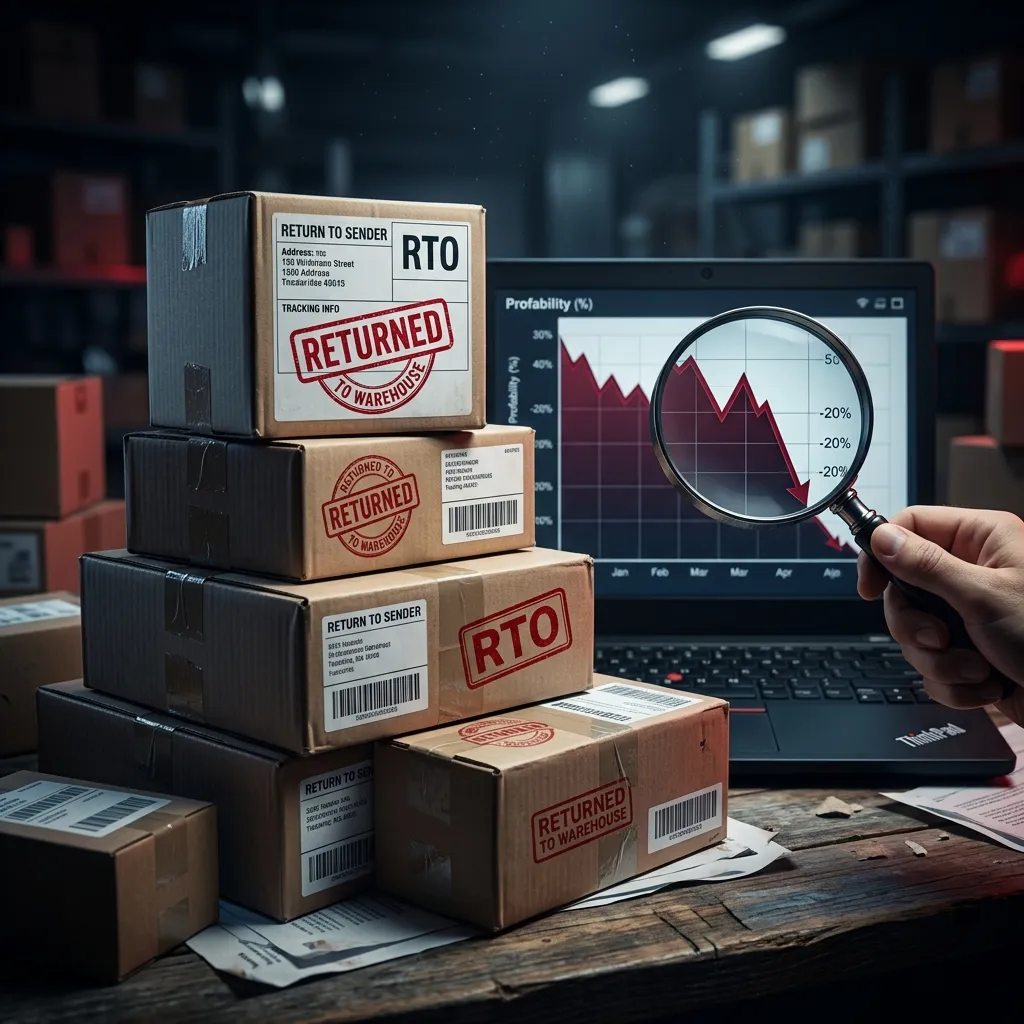
What an RTO means for a Meesho seller
RTO, or Return to Origin, is an order that was shipped but came back before successful delivery. A customer return begins after delivery. Keep these outcomes separate: they can have different payment entries, stock conditions and next steps. The word “return” alone is too broad for a margin calculation.
An RTO may follow an undeliverable address, refusal at delivery, failed contact or another courier event. The order timeline is the starting point for understanding what happened. Do not infer the cause from the final RTO status alone, and do not treat every cash-on-delivery buyer as a likely failure.
How much did that RTO actually cost?
The cost of one RTO is specific to that sub-order. Start with its payment statement and any adjustments. Then add the packaging and handling you paid for, plus any damage or repacking cost observed when the parcel came back. If the product is intact and can be sold again, its purchase cost has not necessarily become a full loss; it is still stock, although cash and time were tied up.
| Check | Evidence to keep |
|---|---|
| Delivery and return-related payment lines | Payment export and the sub-order reference |
| Original packaging and fulfilment work | Unit packaging cost and packing record |
| Condition of stock received back | Inspection note and any damage evidence |
| Claim or later reimbursement | Claim status and subsequent payment entry |
Do not multiply a made-up “average RTO penalty” by all failed deliveries. Meesho's current terms and your statement determine which amounts apply. Also avoid double counting a delivery charge if it is already included in the settlement number you are using. The payment CSV guide explains how to follow the entries.
Measure an RTO rate from distinct orders
Choose one seller account and a shipped-order cohort, then allow enough time for its delivery outcomes to settle. Count distinct sub-orders that became RTO and divide by distinct shipped sub-orders in that cohort. Label the time period and whether pending orders were excluded. A payment export can contain several rows for one order; those are events, not additional orders.
Break the rate down by SKU or product variation only when there are enough orders for the pattern to be meaningful. Compare the return reason and stock inspection notes with the listing, packaging and dispatch records. A sudden change may reflect a specific product batch or service issue rather than a permanent category-wide rate.
Find causes you can actually change
- Listing accuracy: Check whether size, colour, included quantity and material match what the buyer receives.
- Pick and pack: Compare the SKU and quantity on the order with the item in the parcel before sealing it.
- Readable shipping label: Inspect the address and barcode on a test print; a cropped or blurred label can create avoidable handling problems.
- Dispatch discipline: Follow the deadline shown for each order and keep handover proof where available.
- Courier events: Review tracking and pickup details for clusters of failed delivery, then use the current Supplier Panel support route with order references.
These checks can expose avoidable problems. They do not guarantee that an RTO will disappear, and a return-rate improvement should be measured against actual order cohorts rather than assumed from a generic benchmark.
A routine after an undelivered parcel returns
- Match the returned parcel to its sub-order and inspect the seal and contents.
- Record whether the item is saleable, needs repacking, is damaged or is missing.
- Compare the order timeline and payment lines. Keep any later adjustment or claim separate.
- If evidence supports a claim, use Meesho's current claim instructions and deadlines in the Supplier Panel. Do not assume a claim will be approved.
- Update the SKU's real cost and RTO rate. Test a revised pricing scenario in the Meesho profit calculator.
For a wider view of product, packaging, ads and order outcomes, see the true cost of selling on Meesho guide.
Common questions
What is RTO on a Meesho order?
Return to Origin means a parcel was not delivered to the buyer and was sent back to the seller. It is different from a customer return after successful delivery.
How much does one Meesho RTO cost?
There is no reliable universal amount. Check the payment entries for that sub-order, packaging and handling costs, and the condition of stock received back. Avoid assigning a customer-return charge to an RTO without evidence.
How do I calculate my RTO rate?
For one account and period, divide distinct orders that became RTO by distinct shipped orders in the same cohort. Do not count multiple lifecycle or payment rows as separate orders.
Try the workflow with your own data.
Open the matching Seller Analytics Hub tool and review the result before using it for dispatch or reporting.


